
Spine Surgery
Herniated and degenerative discs, sciatica, stenosis and spondylolisthesis — treated surgically when surgery is the right answer, and without it when it isn't. Most spine patients we see don't end up in an operating room.
Conditions and procedures
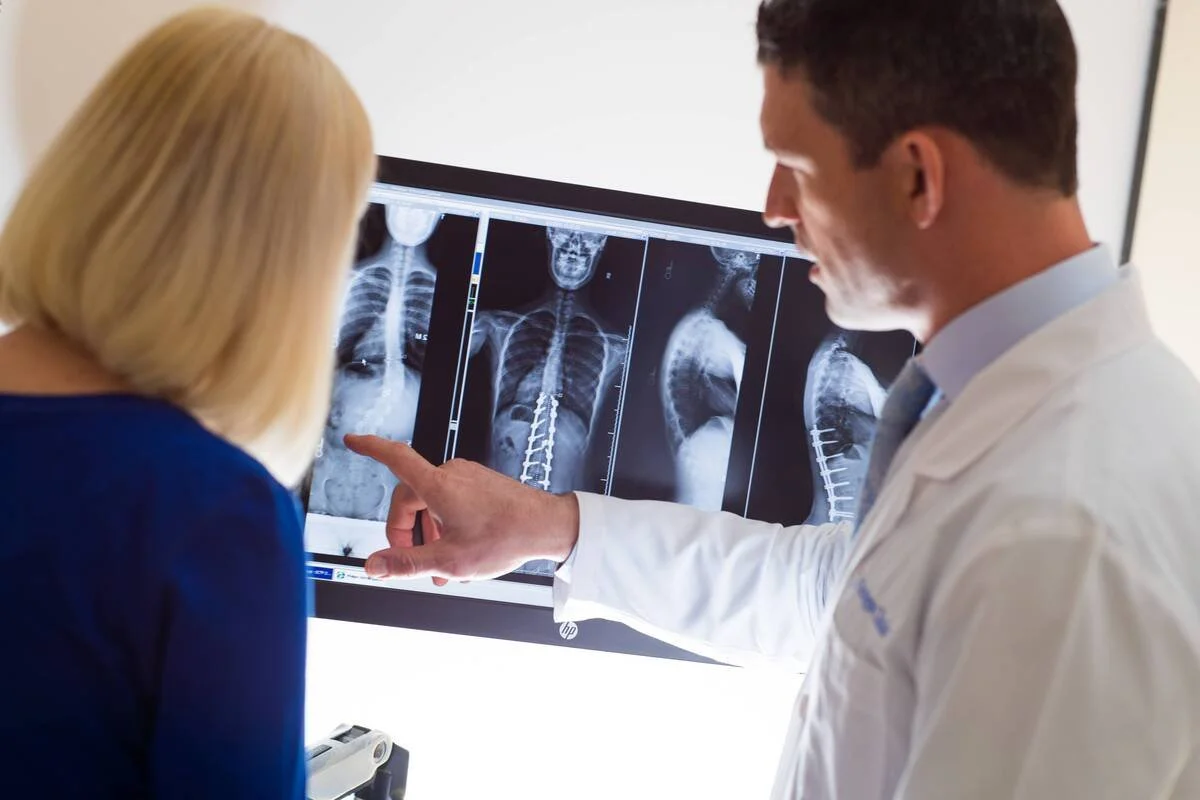
Bring your imaging if you have it — we'll review it at the first visit.
Conditions we treat
- Herniated disc
- Bulging disc
- Degenerative disc disease
- Sciatica
- Spinal stenosis
- Spondylolisthesis
- Spondylosis
- Osteoarthritis of the spine
- Spinal fractures
- Spinal cord tumors
Treatments we offer
- Minimally invasive spinal decompression
- Spinal fusion
- Artificial disc replacement
- Spinal stabilization
- Robotic-assisted spine surgery
- Nerve blocks and interventional pain relief
- Non-surgical rehabilitation and therapy
Surgery is the last option, not the first
A great many people with back and neck pain get better without an operation. We start with an accurate diagnosis, then work through the least invasive options that could reasonably resolve it — therapy, injections, nerve blocks — before surgery is on the table.
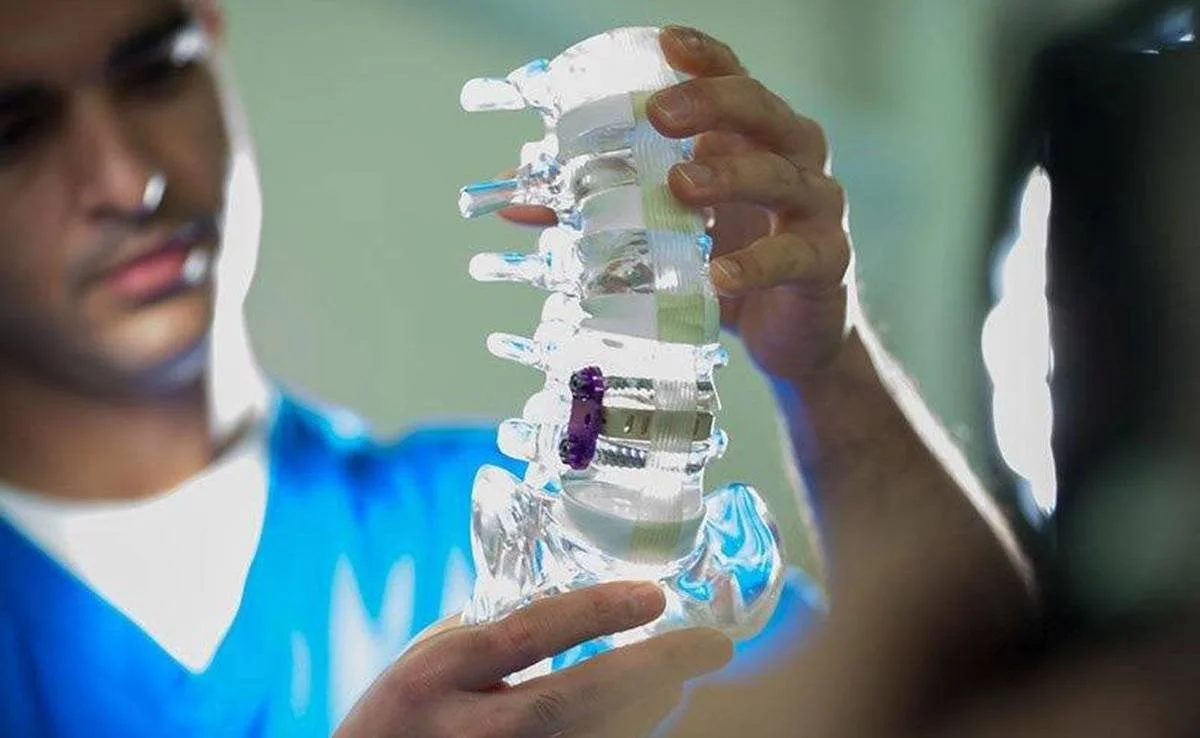
When surgery is genuinely the right answer, minimally invasive technique means smaller incisions, less tissue disruption, less post-operative pain and a shorter stay. For the right candidates we offer artificial disc replacement, which preserves motion rather than fusing the segment, and robotic-assisted placement for greater precision.
Diagnosis, procedure and recovery in one place
Common questions
Will I definitely need surgery?
No — and most people don't. A great many back and neck conditions resolve with therapy, injections or time. Our first job is an accurate diagnosis; surgery is recommended only when the problem is structural and the less invasive options have been exhausted or clearly won't work. If you don't need an operation, we'll tell you that.
What does "minimally invasive" actually mean?
Smaller incisions and less disruption to the muscle and tissue around the spine, using specialised instruments and imaging guidance rather than a large open exposure. In practice that usually means less post-operative pain, a shorter hospital stay and a faster return to normal activity. It is not suitable for every case, and your surgeon will say plainly whether it is for yours.
What's the difference between fusion and disc replacement?
Fusion joins two vertebrae permanently, which stops the painful motion but also removes it. Artificial disc replacement puts an implant in place of the damaged disc so the segment keeps moving. Disc replacement isn't right for everyone — it depends on the level, the condition and your overall spinal health — but where it is an option we'll discuss it with you.
How long is recovery?
It varies widely by procedure. A minimally invasive decompression may have you walking the same day and back to light activity within a couple of weeks; a multi-level fusion is a matter of months. Your surgeon will give you a realistic timeline for your specific procedure before you consent, not after.
Do I need a referral?
Many patients are referred by a primary care provider, a pain specialist or an employer, but you can request a consultation directly. Check with your insurance provider for referral or prior-authorization requirements. If you have recent imaging, bring it — it often saves a visit.
Get a straight answer about your spine
Bring your imaging and your questions. You'll leave knowing what's causing the pain and what your options actually are — including the option of not operating.
or call 913-322-7408