
Endoscopy & Colonoscopy
Screening colonoscopy, diagnostic endoscopy and treatment for reflux, IBD, swallowing disorders and colorectal conditions — in a hospital where the procedure room, the lab and the recovery bay are all in the same building.
is the age screening should start
National guidelines recommend average-risk adults begin colorectal cancer screening at 45 — earlier if you have a family history or symptoms. Colonoscopy is the only screening test that both finds polyps and removes them in the same visit.
Talk to us sooner if you have:
Blood in the stool · A change in bowel habits lasting more than a few weeks · Unexplained weight loss · Persistent abdominal pain · A parent, sibling or child diagnosed with colorectal cancer or advanced polyps
These don't wait for a birthday.
Conditions and procedures
From routine screening through to complex gastrointestinal surgery.
Conditions we treat
- Gastroesophageal reflux disease (GERD)
- Irritable bowel syndrome (IBS)
- Crohn's disease and ulcerative colitis
- Diverticulitis
- Swallowing and esophageal disorders
- Gallbladder and biliary disorders
- Liver disease
- Pancreatic disease
- Chronic constipation and motility disorders
- GI cancer screening and surveillance
Procedures we perform
- Screening and diagnostic colonoscopy
- Upper endoscopy (EGD)
- Polyp removal
- Gallbladder removal (cholecystectomy)
- Anti-reflux surgery (fundoplication)
- Hernia repair — inguinal, umbilical, hiatal
- Colon and rectal surgery
- Small bowel resection and appendectomy
- Gastrectomy and bariatric revision
- Treatment of GI bleeding or obstruction
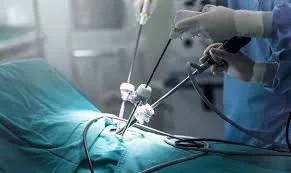
Laparoscopic and robotic-assisted GI surgery
Most of what we find at endoscopy is managed without an operation. When surgery is the answer, our fellowship-trained surgeons use laparoscopic and robotic-assisted technique wherever the anatomy allows — smaller incisions, less discomfort, and a faster return to normal.
Because the gastroenterologist and the surgeon work in the same building and share the same record, there's no waiting on notes to travel between practices. Many diagnostic and surgical procedures are same-day.
Patient instructions
Read these before your procedure date. The bowel prep instructions in particular — an incomplete prep usually means the procedure has to be rescheduled.
Common questions
Will I be asleep for it?
You'll be sedated, so you won't feel the procedure or remember it. You will need someone to drive you home afterwards — you can't drive yourself, and a taxi or rideshare on your own isn't sufficient. Arrange that before the day.
How bad is the prep, really?
It's the part people dread and it's genuinely unpleasant, but it's one day. The instructions above are worth following exactly — the single most common reason a colonoscopy has to be repeated is an incomplete prep, and repeating it means doing the prep twice.
Is a screening colonoscopy covered by insurance?
Most plans cover screening colonoscopy for average-risk adults at no cost to you. Be aware that if a polyp is found and removed, some plans reclassify it as diagnostic rather than screening, which can change what you owe. Ask your insurer how they handle that before you book, and see our price transparency page for our published charges.
Do I need a referral?
Not necessarily — you can request a screening colonoscopy directly. If you have symptoms, a referral from your primary care provider is common but not required. Check your plan for prior-authorization requirements.
How long does it take and when can I go back to work?
The procedure itself usually takes 20 to 45 minutes, plus recovery time while the sedation wears off — expect to be at the hospital two to three hours in total. Most people feel normal by the next morning and go back to work then. Plan to take the day of the procedure off.
What if you find something?
Polyps are usually removed during the same procedure and sent for analysis, which is part of why colonoscopy is recommended over stool-based tests. Your gastroenterologist will talk to you after you wake up and you'll have results and a plan before you leave. If further treatment is needed, our GI surgeons are in the same building.
Book the screening you've been putting off
Colorectal cancer is one of the most preventable cancers there is, and the thing that prevents it is a procedure you'll have forgotten about by the weekend.
or call 913-322-7408