
Cardiology
Chest pain, arrhythmia, heart failure, high blood pressure and cholesterol — evaluated by board-certified cardiologists with EKG, echocardiography and stress testing onsite, so the work-up happens in one place instead of across three appointments.
Appointments often within 24–48 hours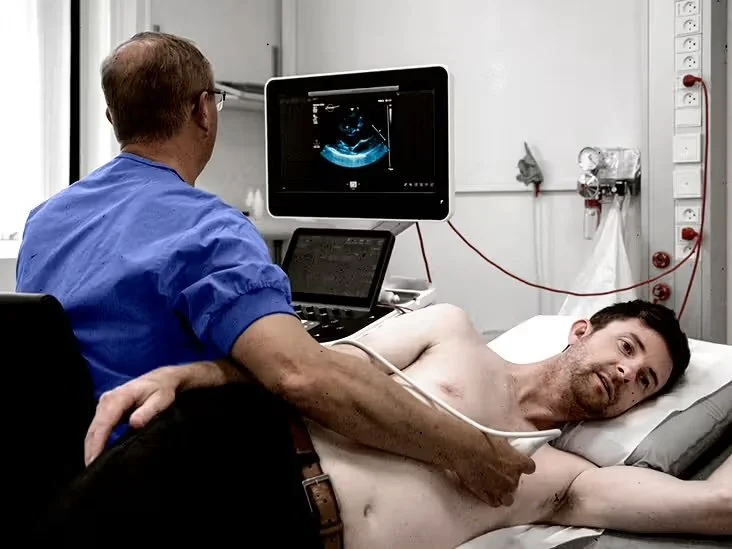
If symptoms are happening right now, call 911
Do not wait for an appointment and do not drive yourself. Chest pain or pressure, pain spreading to the arm, neck, jaw or back, sudden shortness of breath, cold sweat, nausea, light-headedness or fainting can signal a heart attack. Emergency treatment within the first hour makes the greatest difference to the outcome.
When to see a cardiologist
If any of these have been going on for a while, get evaluated rather than waiting to see whether it settles.
Conditions and services
Diagnosis, testing and ongoing management, with the hospital behind us if you need more.
Conditions we treat
- Coronary artery disease (CAD)
- Congestive heart failure (CHF)
- Atrial fibrillation and other arrhythmias
- Hypertension
- Heart valve disorders
- Cardiomyopathy
- Chest pain and angina
- High cholesterol and lipid disorders
- Heart palpitations
- Syncope (fainting)
- Peripheral artery disease (PAD)
Services we provide
- Cardiac evaluation and screening
- Electrocardiogram (EKG/ECG)
- Echocardiogram (heart ultrasound)
- Stress testing
- Holter and event monitoring
- Cardiac risk assessment
- Hypertension management
- Arrhythmia evaluation and monitoring
- Cholesterol and lipid management
- Heart failure management
- Pre- and post-operative cardiac clearance
We listen before we test
Good cardiology starts with the history — what the symptoms actually feel like, when they happen, what you were doing. Numbers matter, but they're the second conversation, not the first.
EKG, echocardiography, stress testing and monitoring are all onsite, so the work-up doesn't spread across three locations and several weeks. If your evaluation shows you need treatment we don't provide here, your cardiologist arranges the referral and stays involved in your care.
What a first visit looks like
- History and examination Your symptoms, your medications, your family history and your risk factors — in detail, before anything is ordered.
- Testing, often the same day EKG and, where it's indicated, an echocardiogram or stress test — without a separate appointment at another building.
- Results explained to you What the tests show, what they don't, and what it means for you. In plain language, not a printout.
- A plan, and a follow-up Medication, risk-factor management, monitoring, or referral if you need something we don't do here.
Seen quickly, worked up in one place
Common questions
How quickly can I be seen?
Often within 24 to 48 hours. If your symptoms are new, worsening, or your referring physician has flagged them as urgent, say so when you call and we'll prioritise accordingly. Anything that could be an emergency should go to 911 rather than an appointment.
Do I need a referral?
Many patients come by referral from a primary care physician or a surgeon needing pre-operative clearance, but you can request an appointment directly. Check your insurance for referral or prior-authorization requirements.
What should I bring to the first appointment?
A list of your current medications with doses, any recent test results or EKGs you have, your blood pressure readings if you take them at home, and a note of your family history of heart disease. If symptoms come and go, jot down when they happen and what you were doing.
Will I have tests the same day?
Often, yes. EKG, echocardiography and stress testing are all onsite, so straightforward work-up can frequently be done in the same visit rather than booked separately. Your cardiologist decides what's needed after examining you.
What if I need a procedure like a catheterization or a stent?
Our focus here is diagnosis, testing and ongoing management. If your evaluation shows that you need a cardiac catheterization, a stent, an ablation or heart surgery, your cardiologist arranges the referral, makes sure the right information goes with you, and stays involved in your care afterwards.
Can you do my pre-surgery cardiac clearance?
Yes, and it's a routine part of what we do. Because our surgical teams are in the same building and share the same record, clearance doesn't involve chasing notes between practices.
I've been told I need a second opinion. Will you give me a straight one?
Yes. Bring whatever imaging, reports and test results you have. You'll get our honest read, including if we agree with the first opinion.
Don't wait to get it looked at
Early evaluation is the difference between managing a heart condition and reacting to one. Most patients are seen within 24 to 48 hours.
or call 913-322-7408